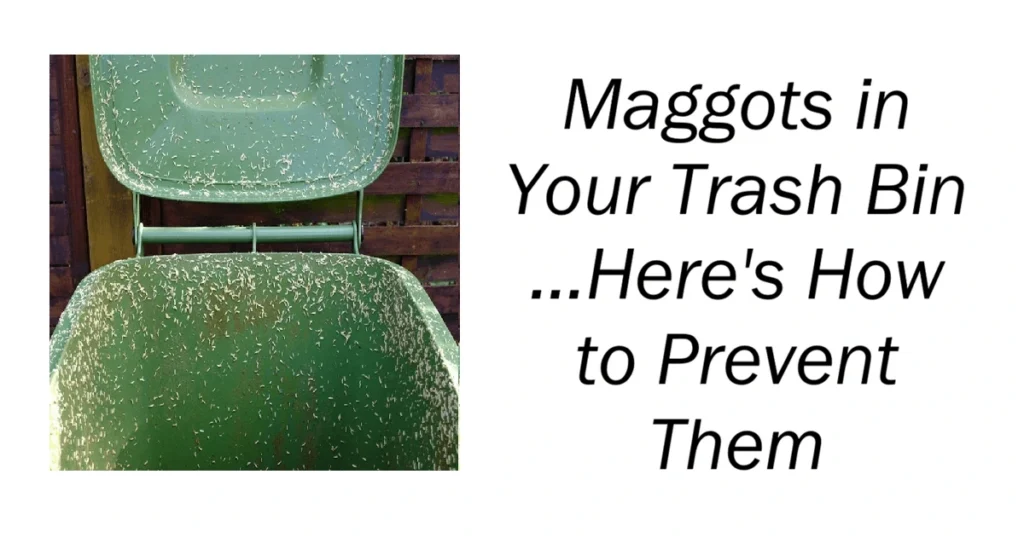
Few things are more unpleasant than opening your trash bin on a warm day and discovering it crawling with maggots.
These tiny white larvae seem to appear overnight, often bringing foul odors and making waste disposal an unpleasant chore. The good news is that maggots don’t appear by magic—and with a few simple precautions, you can prevent them from taking over your bin.
Here’s why maggots appear, how they develop so quickly, and what you can do to keep your trash bin clean and pest-free.
Why Do Maggots Appear in Trash Bins?
Maggots are the larval stage of flies.
Adult flies are constantly searching for warm, moist places to lay their eggs, and trash bins—especially those containing food waste—provide the perfect environment.
Organic waste such as:
- Meat scraps
- Fruit peels
- Vegetables
- Leftovers
creates a warm, nutrient-rich habitat where fly eggs can hatch and thrive.
Once the eggs hatch, the larvae begin feeding immediately on the available waste.
Under favorable conditions, this process happens surprisingly fast.
The Maggot Life Cycle
The reason maggot infestations seem to explode so quickly is their rapid life cycle.
Here’s how it works:
- Adult flies lay eggs on organic waste.
- Eggs hatch into maggots (larvae).
- The larvae feed and grow rapidly.
- They develop into pupae.
- Adult flies emerge and begin laying new eggs.
In warm weather, the entire process can occur in just a few days.
This means a single fly can quickly lead to hundreds of maggots if conditions are ideal.
5 Simple Ways to Prevent Maggots
Prevention is much easier than dealing with a full infestation.
These simple habits can make your trash bin far less attractive to flies.
1. Wrap Food Waste Properly
One of the most effective ways to reduce fly activity is to wrap food scraps before placing them in the bin.
Consider using:
- Newspaper
- Compostable bags
- Paper food packaging
This creates a barrier that makes it more difficult for flies to reach the waste.
It’s particularly useful for:
- Meat scraps
- Fish remains
- Cooked food leftovers
which are especially attractive to flies.
2. Sprinkle Salt on Food Waste
Salt can help reduce moisture inside the bin.
Because flies prefer damp environments for laying eggs, a drier bin becomes much less appealing.
If you’re disposing of uncovered food scraps, lightly sprinkling salt over them may help discourage fly activity.
However, use salt sparingly if the contents are intended for composting.
3. Improve Air Circulation
Many people assume a tightly sealed bin is always best.
In reality, moisture buildup inside the container can create ideal breeding conditions.
Allowing some airflow may help reduce condensation.
If appropriate for your bin design and local regulations, slightly propping the lid open can improve ventilation and reduce excess humidity.
4. Add Newspaper or Straw
Placing absorbent materials at the bottom of the bin can help keep moisture levels under control.
Good options include:
- Newspaper
- Cardboard
- Straw
These materials absorb liquids that would otherwise collect in the bottom of the container and create a favorable environment for maggots.
5. Clean Your Bin Regularly
Even after the trash is emptied, residue often remains inside the container.
Food particles, liquids, and grime can continue attracting flies.
After collection day:
- Rinse the bin thoroughly
- Scrub away residue
- Allow it to dry completely
Many people also use vinegar-based cleaning solutions because flies tend to dislike the strong smell.
A clean bin is much less inviting to pests.
Natural Ways to Get Rid of Existing Maggots
If maggots have already appeared, don’t panic.
Several simple methods may help reduce or eliminate them.
Use Salt
Covering maggots with salt can dehydrate them and make the environment less hospitable.
This is one of the simplest household remedies.
Add Sand
A layer of sand can make movement difficult for maggots and help dry out moist areas.
However, avoid excessive amounts if the waste is destined for composting, as sand may interfere with the composting process.
Try Ivy or Lavender
Some people place ivy branches or lavender inside the bin because flies and larvae tend to dislike these strong scents.
While not a guaranteed solution, these natural deterrents may help reduce fly activity.
Extra Tips for Summer
Warm weather significantly increases the risk of maggot infestations.
To minimize problems during summer:
 Keep bins in shaded areas whenever possible Freeze meat scraps until collection day Avoid allowing liquids to pool inside the container Clean spills immediately Keep the surrounding area tidy
Small changes can make a big difference.
Why Prevention Matters
Maggots themselves are usually more unpleasant than dangerous, but they often indicate that flies are breeding successfully around your home.
Reducing fly activity helps:
- Minimize bad odors
- Improve hygiene
- Prevent future infestations
- Make waste handling more pleasant
The sooner you address the conditions attracting flies, the easier the problem is to control.
Final Thoughts
Maggots in the trash bin are a common problem during warm weather, but they’re usually preventable.
By reducing moisture, wrapping food waste, cleaning bins regularly, and improving ventilation, you can make your trash container a much less attractive place for flies to lay eggs.
And if maggots do appear, simple remedies such as cleaning the bin, using salt, and removing excess moisture can help restore control quickly.
A few minutes of prevention today can save you from a much bigger—and much smellier—problem tomorrow.